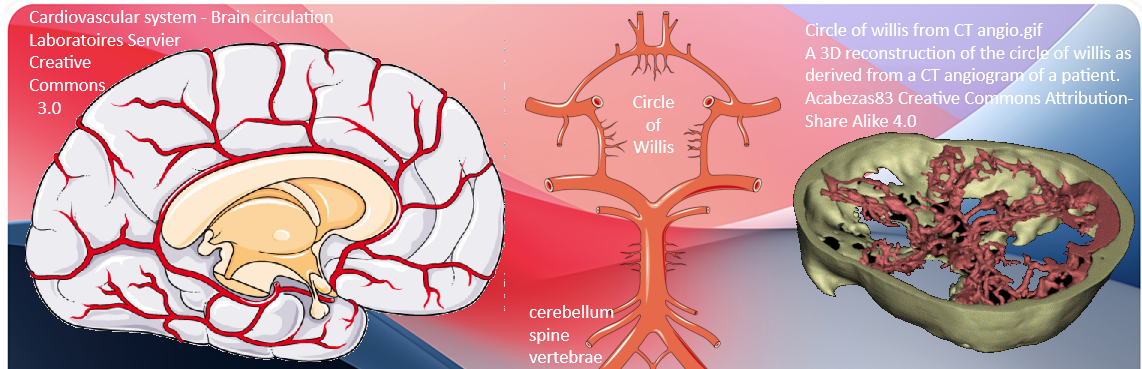
Red and near infrared photobiomodulation are good for depression? Enhancement of cytochrome C oxidase activity in the mitochondria is addressed in a round about way in the transcranial red light post. Red light may simply improve blood flow to the depressed brain via the release of nitric oxide. Some reports suggest the nitric oxide might come from the heme group of cytochrome C oxidase. Release of NO improves blood flow. Other mechanisms may be involved in this generally considered safe practice.
1. Control of Cerebral Blood Flow (CBF)
In their review on depression Liu 2022 claim that cerebral blood flow is maintained by three mechanisms:
- Cerebral autoregulation (CA) is the ability of the brain to maintain blood slow in spite of temporary changes in systemic blood pressure.
- Neurovascular coupling (NVR) is neurons controlling vascular smooth muscle contraction. Because the brain does not store energy in fat or glycogen like skeletal muscle does, blood flow in response to energetic need must be tight.
- Cerebrovascular reactivity (CVR) is generally considered to be vasodilation in response to increases in CO2 associated with increased metabolic activity. Examples of blood flow being rerouted in response to a partial left and total right carotid artery occlusion imply that if CO2 is not being cleared fast enough by flood flow, it encourages more blood flow.
The Wikipedia page on Cerebral Circulation contains similar information and gives the readers some striking images that illustrate that the vasculature is as much a part of the brain as is gray and white matter.
The Liu 2022 review went into details of which connections were altered in depression without the mention of red light. Let’s look at the anterior cerebral artery (ACA), which is part of the Circle of Willis.

A study of Wang 2014 compared regional cerebral blood flow (rCBF) in patients with major depressive disorder (MDD) with normal subjects This study utilized 320-slice Computed-Tomography (CT). This table shows changes in the flow through the anterior cerebral artery. Flow through the middle, posterior and basillar arteries were also measured in Liu 2022.
| Items | Control (n = 41)Mean ± SEM, cm/s | Depression(n = 39) **P<0.01 |
| systolic peak velocity, right | 96.31±11.76 | 79.85±20.41** |
| mean flow velocity, right | 63.95±8.15 | 54.44±14.80** |
| diastolic velocity, right | 40.67±6.93 | 37.00±11.40 |
| systolic peak velocity, left | 96.64±12.21 | 77.31±14.26** |
| mean flow velocity, left | 64.10±7.82 | 52.90±11.17** |
| diastolic velocity, left | 41.64±5.98 | 36.54±8.70** |
Systole is the part of the cardiac cycle in which blood is ejected. The heart fills with blood during diastole. How much blood gets through a blood vessel depends on the diameter of the blood vessel, the length of the blood vessel, the blood pressure, and the viscosity of the the blood. The diameter of the blood vessel is controlled by the contractile state of the vascular smooth muscle cells. See the smooth muscle contraction post.
2. Nitrosylated thiols and heme
Keszler 2018 looked at the ability of 670 nm red light to elicit vasodilation of excised rat facial arteries in the presence of two NO donors: nitrosogluathione and adi nitroso iron complex (DNIC). The concept is that these compounds are in our bodies and a reserve of nitric oxide.

Nitrosoglutathione came from PubChem. nitroosyl heme was created from a PubChem image and from a Wikipedia satellite page on the nitroso modification. This site discusses the formation of these modifications and inhibition of nitrosylation by ascorbate, aka Vitamin C. Both compounds absorb in the red region of the visible spectrum.
The conclusion of Keszler 2018 is summarized in Keszler 2018 Fig 6.
3. 1064 nm NIR improves connectivity
Truong 2022 exploited the concept of Vasomotion , spontaneous oscillations of blood vessels. There are three sources of nitric oxide. They all have their own rhythms.
- endogenic oscillation (0.003–0.02 Hz) vascular endothelial metabolism
- neurogenic oscillation (0.02–0.04 Hz) neuron (and glia) metabolism
- myogenic oscillation (0.04–0.15 Hz) vascular smooth muscle activity.
The timing of Ca2+ release and sequestration into intracellular stores is thought to control nitric oxide pulses. The following is a summary of figures of a pretty awe inspiring study that hammers home the point that things are way more complicated than the flow of blood through the anterior cerebral artery.
- Fig 1 of Truong 2022 illustrates the set up of 1064nm right prefrontal cortex directed NIR light and the monitoring of oxy hemoglobin in other parts of the brain.
- Fig 2 Changes in oxyhemoglobin absorption were measured with blood vessel oscillations.
- Fig 3 Even after stimulation, some parts of the brain show more connectivity t-scores.
- Fig 5 Endothelial metabolism is the clear winner of what controls changes in oxyhemoglobin in response to 1064 nm NIR.
- Fig 6 (general) and Fig 7 (specific connections ) Endothelial metabolism is the main conduit of red light connectivity.
- Fig 8 Myogenic frequency band shows more efficient global and local connectivity with NIR.
- Fig 9 1064 nm NIR activates cytochrome C oxidase and releases bound NO to relax blood vessels, see the spinoff post.
Truong is a complicated study that ties together the concept of increasing ATP production and increasing blood flow to the depressed brain. Release of NO bound to the heme group of cytochrome C oxidase can be thought as a form of detoxification.
4. Photomodulation / Red NIR reviews
Fig 1 of Cassano 2016 summarizes the mechanisms of potomodulation, aka red NIR, therapy. Nitric oxide release was not part of the mechanism at the time of this review. Table 1 summarizes clinical studies at the time of the writing.
Fig 2 of Wang 2025 gives the possible mechanisms of red and NIR photomodulation therapy for depression. Note the mitochondria, NO, and ATP between 11 and 1 O’clock. Fig 3 is a summary of signaling pathways. Scientists will not immediately understand everything about what we think is going on in this cartoon. Wang 2025 discuss many previous clinical trials but do not present them in table form. Both reviews conclude that red light therapy is safe.
 5. Red Light Therapy Home for Mental Health
Much of what Red Light Therapy Home has to say about how things work comes from a review of Cassano 2016.
“Decreased Cerebral Blood Flow: Hypoperfusion in frontal lobe impairs cognition; NIR increases by 20-30%”
This statement is entirely consistent with the independent review of the literature presented in this post. Cerebral blood flow is insanely complicated. Red light may liberate nitric oxide from protein thiols and heme iron (Keszler 2019) or neurons, smooth muscles, and particularly endothelial cells. ( Truong 2022). We have so much more to learn how redlight works for depression. Many reviews of clinical studies tell us it is safe. (Cassano 2016, Wang 2025)
If you would like to order your own red light therapy device from Red Light Therapy Home, use this promo code for a 6% discount
Friend6-ZQDGW49R
References
- Cassano P, Petrie SR, Hamblin MR, Henderson TA, Iosifescu DV. Review of transcranial photobiomodulation for major depressive disorder: targeting brain metabolism, inflammation, oxidative stress, and neurogenesis. Neurophotonics. 2016 Jul;3(3):031404. PMC free paper
- Keszler A, Lindemer B, Hogg N, Lohr NL. Ascorbate attenuates red light mediated vasodilation: Potential role of S-nitrosothiols. Redox Biol. 2019 Jan;20:13-18. PMC free paper
- Liu M, He E, Fu X, Gong S, Han Y, Deng F. Cerebral blood flow self-regulation in depression. J Affect Disord. 2022 Apr 1;302:324-331. free paper Blood flow is mucked up in depression.
- Truong NCD, Wang X, Wanniarachchi H, Liu H. Enhancement of Frequency-Specific Hemodynamic Power and Functional Connectivity by Transcranial Photobiomodulation in Healthy Humans. Front Neurosci. 2022 Jun 10;16:896502. PMC free paper
- Wang L, Mao L, Huang Z, Switzer JA, Hess DC, Zhang Q. Photobiomodulation: shining a light on depression. Theranostics. 2025 Jan 1;15(2):362-383. PMC free paper
- Wang Y, Zhang H, Tang S, Liu X, O’Neil A, Turner A, Chai F, Chen F, Berk M. Assessing regional cerebral blood flow in depression using 320-slice computed tomography. PLoS One. 2014 Sep 24;9(9):e107735. PMC free paper
Leave a Reply