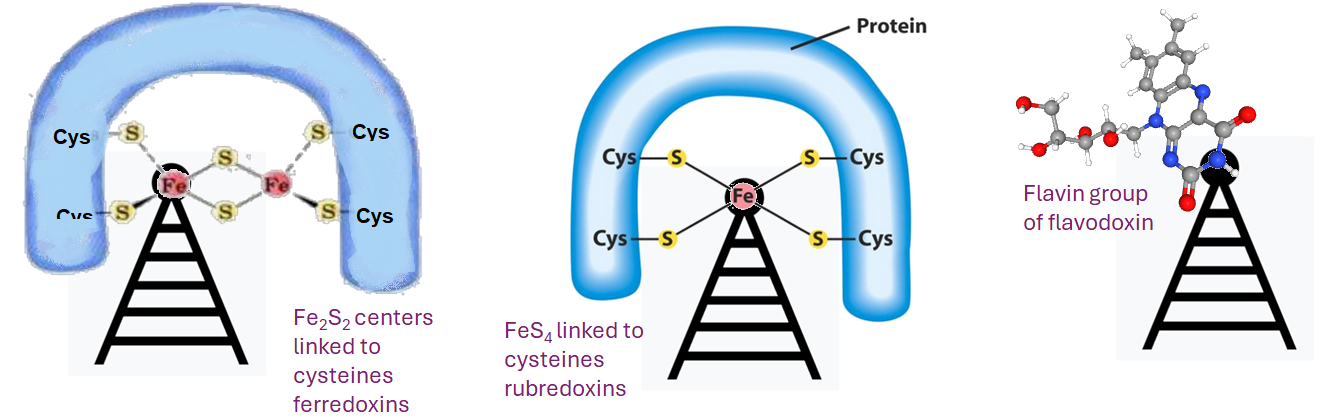
Facultative anaerobes that is. This post is a follow up to the PEMF and microbiome post that featured some exciting results from QuantumTx. Two publications from a different group using 50 Hz PEMF of 7mT are presented. The Fojt group examined four human pathogens and a blend of sulfate reducing bacteria (SRB) collection. All of these species contain the three potential antenna classes of enzymes. Sulfate reduction was shown to be minorly affected by PEMF with the potential of killing of SRB being a bigger part of the phenomenon. The structures of two enzymes in the bacterial sulfate reduction process are shown.
50 Hz and 7 mT to kill pathogens
Fojt 2010, comparison of environmental bacteria exposure to various field strengths and 50Hz frequency. We do not know if this is dirty electricity with high voltage transients on top of what comes out of the usual house hold frequency. The authors examined four distinct species of bacteria and a collection of sulfate reducing bacteria species (SRB). Just a small amount of data from Fojt 2010 is presented in the table. The take home from the publication is that it takes only 12 minutes of exposure for killing 30%. The field strength is over 4x of what QuantumTx used in a previous post. Many of these bacteria are facultative anaerobes. It was not crystal clear if these killing experiments were performed in totally anoxic conditions. The three potential PEMF antenna class of enzymes were searched for in the NCBI protein database.
| % remaining vs unexposed | Staphylococcus aureus | Paracoccus denitrificans | Escherichia coli | Leclercia adecarboxylata | SRB |
| 12min 7.1 mT | 87% | 84% | 70% | 73% | 86% |
| ferredoxin? | Q6G6P6 Biotin synthase Note: Binds 1 [4Fe-4S] cluster. The cluster is coordinated with 3 cysteines and an exchangeable S-adenosyl-L-methionine. | Q59662 Succinate dehydrogenase iron-sulfur subunit | P0AAJ5 Formate dehydrogenase-O iron-sulfur subunit, Aerobic formate dehydrogenase iron-sulfur subunit, FDH-Z subunit beta, Formate dehydrogenase-O subunit beta | A0A3E1ZYS7Succinate dehydrogenase iron-sulfur subunit | P00209 Ferredoxin 2 Ferredoxins are iron-sulfur proteins that transfer electrons in a wide variety of metabolic reactions. |
| rubredoxin? | A0A2S6DC12 nitrite reductase 4Fe-4S center | A1BAH2 Assimilatory nitrite reductase (NAD(P)H) large subunit Fe-S center verified | B1XCN7 Anaerobic nitric oxide reductase flavorubredoxin | A0A9X3YDR5 Nitrite reductase large subunit NirB | P04170 rubredoxin 1 |
| flavodoxin? | A0AAW4YBF0_STAAUflavin reductase family protein | A1B0X7 Flavin reductase domain protein, FMN-binding protein | A0A061KGJ5 flavin reductase family protein | A0AAP9DD76 flavin reductase family protein | Q9KIT1 flavoredoxin |
The outcome of this thought experiment is that ferredoxins, rubredoxins, and flavodoxins are part of the genomes of these five bacteria that the Fojt group chose in 2010. It sort of brings home the concept that bacteria are the origin of our mitochondria: all chock full of metal containing proteins for the purpose of transporting electrons. Paracoccus denitrificans have entered into a Wikipedia discussion of the bacteria to mitochondria origins.
Killing sulfate reducing bacteria with PEMF Part 2
The same group used electrodes coated with SRB to measure flow of electrons in the process of reducing sulfate. It seems like the system was anaerobic. Fojt 2012.
Abstract. The effects of 50 Hz magnetic fields on sulphate-reducing bacteria viability were studied electrochemically. Two types of graphite electrodes (pyrolytic and glassy carbon) covered with whole bacterial cells behind a dialysis membrane were used for electrochemical measurements. We found about 15% decrease of reduction peak current density (which indicates desulphurization activity of the bacterial cells – their metabolic activity) on cyclic voltammograms after magnetic field exposure compared to the control samples. We suppose that the magnetic field does not influence the metabolic activity (desulphurization) of sulphate-reducing bacteria but most probably causes bacterial death. Fojt 2012
Sulfur reduction in bacteria occurs in just a few steps.
- ATP + Sulfate 🢂adenosine-5′-phosphosulfate + pyrophosphate via sulfate adenylyltransferase or ATP sulfurylase, no evidence of cofactors like Fe-S centers
- APS 🢂sulfite + AMP via apr 5′-adenylylsulfate reductase (4Fe-4S center)
- sulfite 🢂 H2S via dsr dissimilatory (bi)sulfite reductase. UniProt lists dsr as a suspect of having Fe-S centers
adenosine-5′-phosphosulfate reduction imagery
This image was obtained from NCBI’s structure database for the entry 2FJB. The image on the left shows the protein subunits in color ribbon rendering. The title of this structure is stretching the truth just a bit. AMP and sulfite are products not SFD, Crystallographers do what they have to do. The image on the right has had the protein part removed showing only the products, cofactors, and one sodium ion, Na+.

In this image on the right with most of the protein removed we can see the cysteine side chains used to attach the Fe-S centers. There are a bunch of them. could they be acting as PEMF antenna?
Dissimilatory sulfite reductase imagery
This image was also obtained from the NCBI structure database. The ribbon diagram of the tetramer is shown on the left. This enzyme is also composed of two subunits of two different protein monomers A and B. The image on the right is just the ligands and the one product H2S.

Note how closely the Fe-S centers and the heme groups are packed. Electrons flow through these groups. Could the PEMF from dirty electricity, the Jojt coils, or QuantumTx coils affect this flow of electrons?
Concluding thoughts
It has been extremely hard finding good studies on the affect of anaerobic bacteria to radio frequency or very low frequency PEMF. The QuantumTx results in the are making more sense and they would appear to be extendable to other types of PEMF. The Fojt group seems to favor PEMF killing by DNA damage. If so, could this be secondary to unpaired electrons absorbing PEMF energy and misdirecting it to reactive compounds? QuantumTx seems to have the formula to reduce “bad” bacteria while preserving the health of the mouse. Is this a matter of tuning to antenna unique to bad bacteria? Could other PEMFs achieve the same results? Or the counter argument, could dirty electricity also influence our microbiomes?
References
- Fojt L, Strašák L, Vetterl V. Extremely-low frequency magnetic field effects on sulfate reducing bacteria viability. Electromagn Biol Med. 2010 Dec;29(4):177-85 Sci-Hub free paper
- Fojt L, Vetterl V. Electrochemical evaluation of extremely-low frequency magnetic field effects on sulphate-reducing bacteria. Folia Biol (Praha). 2012;58(1):44-8. free paper
Leave a Reply