Can PEMF be used to treat dental plaque and calculus in pets and people? We must first define our terms. PEMF might help existing treatments for plaque biofilms get in. Magnetic treated water is being used to remove calculus. PEMF treated water has not been tested on dental calculus to the best of my knowledge.
Definitions and links to some cool images
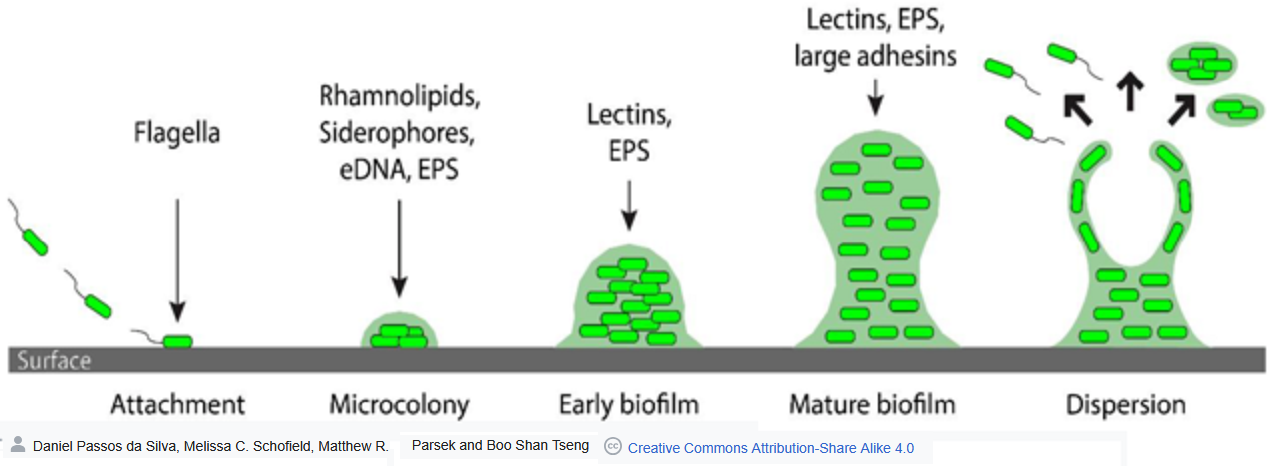
- Biofilms are colonies of bacteria in a matrix containing protein, polysaccharides, lipids, and DNA.
- Dental plaque is a bacteria biofilm plain and simple. Wikipedia authors have it occurring in four phases: 1) association, (2) adhesion, (3) proliferation, (4) microcolonies. OraVet chews containing delmopinol are said to work by preventing adhesion of biofilm forming bacteria. Steve GSshmeisser has an scanning electron microscope image of dental plaque that appears to be rod shaped bacteria in a porous matrix. If we have the prior knowledge that this porous matrix has many negative surface charges we can imagine how the infiltration of a positively charged cation like Ca2+ can really much things up.
- Tartar (Dental Calculus): occurs when calcium precipitates on the biofilm materials of the dental plaque. Wiki authors even give the shemical formulas of the different types of calcium phosphates in tartar that may include hydroxyapatite, a major component of bone. Here is a link to a scanning elecctron microscope image of human dental calculus. From the PubMed abstract, this group was also looking at the elements in the calculus of these ancient humans. This is a link to images of canine dental calculus being scaled away with ultrasound.
Delmopinol
Many veterinarians and “pet parents” may know delmopinol as the active ingredient in OraVet. Delmopinol is a surfactant. It has a hydrophobic tail shown in gray in this PubChem 3D model. It has a nitrogen shown in blue and some oxygens shown in red. Vets may be familiar with desmopinol HCl. This simply means that the nitrogen carries a positive charge that is balanced out by a Cl– anion with a negative charge.

- Gram positive bacteria with more peptidyl glycan in their cell walls were not as susceptible to delmopinol as were Gram Negative bacteria with lipopolysaccharide cell walls. ( Rundegren 1995 ) Even protein release from Gram negative bacteria as mentioned in this publication.
- The 3D image of delmopinol indicates a shape and enantiomers for the chemistry savvy. The positive charged state matters the most according to a clinical trial (Sjödin2016)
- Delmopinol can pent rate biofilms and reduce acid production from glucose suggesting a metabolic action. Simonsson 1991
- The biofilm penetration of non-ionic delmopinol is better than for cationic delmopinol. The thought is that the cation form gets hung up in the negative surface charge extracellular polymers. Sjödin 2019. This study used pH 5 and pH7 for the charged and uncharged forms respectively, Biofilms were allowed to become established. Minimal inhibitory and minimum biofilm irradiation concentrations were determined.
- Attached as well as planktonic Streptooccus sanguinis showed a decrease in vitality after exposure to 0.2% delmopinol-HCl. Only attached bacteria were effected by 0.05% . The total number of attached bacteria was not reduced by the delmopinol treatment. During initial dental biofilm formation, delmopinol-HCl causes a bactericidal effect when applied in concentrations of 0.05% and higher. Burgemeister 2001
- Cyclohexidine and delmopinol 0.2% mouth rinses were compared after four days in male volunteers. Decreases in vitality were measured with a fluorescent microscope. Rundegren 1992
Many of the PubMed abstracts report a loss of bacteria “vitality” as measured by a fluorescent microscope. This compound could be a compound called reasurin, that according to Wikipedia authors, measures the capacity of the bacterium for “aerobic respiration.” This dye is also redox sensitive. Wiki authors reverence an Uptima product information sheet. “Vitality”, in many biofilm experiments, may indicate an active electron transport chain.
Biofilm destroying enzymes
Many vets are familiar with the enzymatic biofilm degrading products for companion animals. These products are moving into the human sector.
- C.E.T. products for dogs and cats contain glucose oxidase and lactoperoxidase.
- Vetoquinol pet tooth paste contains Glucose Oxidase, Lactoperoxidase, Lactoferrin, and Lysozyme.
- Rikvold 2025 biofilm tested a product for humans that contains beta-glucanase and DNase. The biofilms were grown on splints in the mouths of the human volunteers. with no evidence of biofilm removal. Previous results
- Schlafer 2024 tested an enzyme containing lozenge for controlling biofilm growth in humans. These chews contained 1,3-glucanase mutanase, beta glucanase, and DNAse. Biofilms were reduced.
- Mangita 2017 cultured tongue biofilms from the tongues of elderly humans. The proteases papain, actinidin and trypsin were tested.
Magnetized water
There is a system called “HydroFloss” that has been around for sevral decades. Click here for an image of this “WaterPik” like device. HydroFloss sells a concentrated solution of hypochlorous acid (bleach) to enhance the process. According to Vitality4Life Hydrofloss was founded by Don Evan Sr. Don had experience in the use of magnetics in the buildup of scale in water tanks as well as persistent periodontal disease. The water and magnets post has covered the influence of static magnetic fields on calcium and chloride as wells a 4Hz PEMF on an electrolyte solution resembling “snail blood.”
- Watt DL, Rosenfelder C, Sutton CD. The effect of oral irrigation with a magnetic water treatment device on plaque and calculus. J Clin Periodontol. 1993 May;20(5):314-7. free paper These authors drew an analogy between calculus formation on tooth surfaces and hard water scale in plumbing. They claimed that magnetic water devices have been shown to significantly reduce scale deposits in industry. They claimed that an an “oral irrigator” with magnetic water device may have a similar effect on calculus. They used 64 irrigators, 30 of which had their magnetic devices removed. 54 patients with heavy supragingival calculus were given irrigators and told to irrigate twice a day, particularly the lower 6 anterior teeth and not to floss. . After 3 months accretions were measured. The group using an irrigator with a magnetic device showed a 44% greater reduction in calculus volume (p < 0.0005) and a 42% greater reduction in area (p <0.0001) over the group using an unmagnetic irrigator.
- Johnson KE, Sanders JJ, Gellin RG, Palesch YY. The effectiveness of a magnetized water oral irrigator (Hydro Floss) on plaque, calculus and gingival health. J Clin Periodontol. 1998 free paper This was a double blind cross over study meaning that the 29 participants used the irrigator with (or without) the irrigator for three months and then switched over to the other type for another three months. Use of the magnetized device resulted in 64% less calculus that was significant at the p<0.02 level. Plaque (biofilm) formation was not significantly affected. Instructions available on the company website today call for the use of tap water.
The nature of the magnetization has not been determined. Patent searches have failed to reveal the field strength of the magnet exposure to the water and how long that exposure lasts. It is fairly certain that only tap water is to be used in this device, not deionized water. Water hardness can vary from one part of the world to another. EZ water addressed the role of the right combination of field strength and frequency on the creation of EZ water. Would these structures be more or less effective in breaking up the calcium phosphate deposits of dental calculus?
Three ways to treat dental calculus and biofilms
- Calculus, the calcium phosphate deposits that came after the original biofilm, can be broken up by at least one form of magnetized water. The HydroFloss.com website and peer reviewed papers therein give some nice before and after images of human volunteers and how to measure progress. Individual PEMF practitioners have the tools to develop their own protocols.
- In a previous consulting job a coworker and I worked with an enzyme blend of saccharidase, protease, and lipases to remove biofilms from equipment. As I recall we dropped the pH to a point that extracellular DNA might spontaneously hydrolyze. Enzymes for companion animal dental care seem to be not as complete. We can only speculate that this is because what we used for equipment is not safe for inside one’s oral cavity.
- Delmopinol seems to be something special that sometimes appears in . Consult with your vet before using this compound on your pet.
If any form of magnetized water can reduce the calculus the net step would be to reduce the biofilm and kill the bugs the produced it. If the dog or cat will tolerate it, magnetized water irrigation followed by a vet recommended treatment for the bacteria and biofilm? My thought is that when the enzymes and/or delmopinol are sitting on the tooth surface, a little bit of PEMF might help these compounds move in deeper. Ask your vet first.
Leave a Reply